
Most women don't have a shortage of clothes. They have a shortage of clothes that feel like theirs.
You know the moment. You're standing in front of a full closet, running late, and somehow still saying, "I have nothing to wear." It's not really true. There's plenty hanging there. What's missing is the feeling of reaching for something and knowing, instantly, that it's right.
That gap between owning clothes and feeling like yourself in them is worth paying attention to. It usually isn't about needing more. It's about not having built the wardrobe with enough honesty in the first place.
A lot of that comes down to how we shop now. You see something on a stranger, a friend, someone on your feed — it looks incredible on her — and you assume it will translate. Sometimes it does. Often it doesn't, and the piece ends up at the back of the closet, still beautiful, still untouched. Looking fashionable and feeling like yourself are related, but they aren't the same thing. One is about what's currently being celebrated. The other is about what actually belongs to you.
This isn't an article about buying the "right" ten items or following a formula. It's about something slower: learning to notice what you already gravitate toward, and building around that instead of around whatever's trending this month.
Start With Understanding Your Personal Style
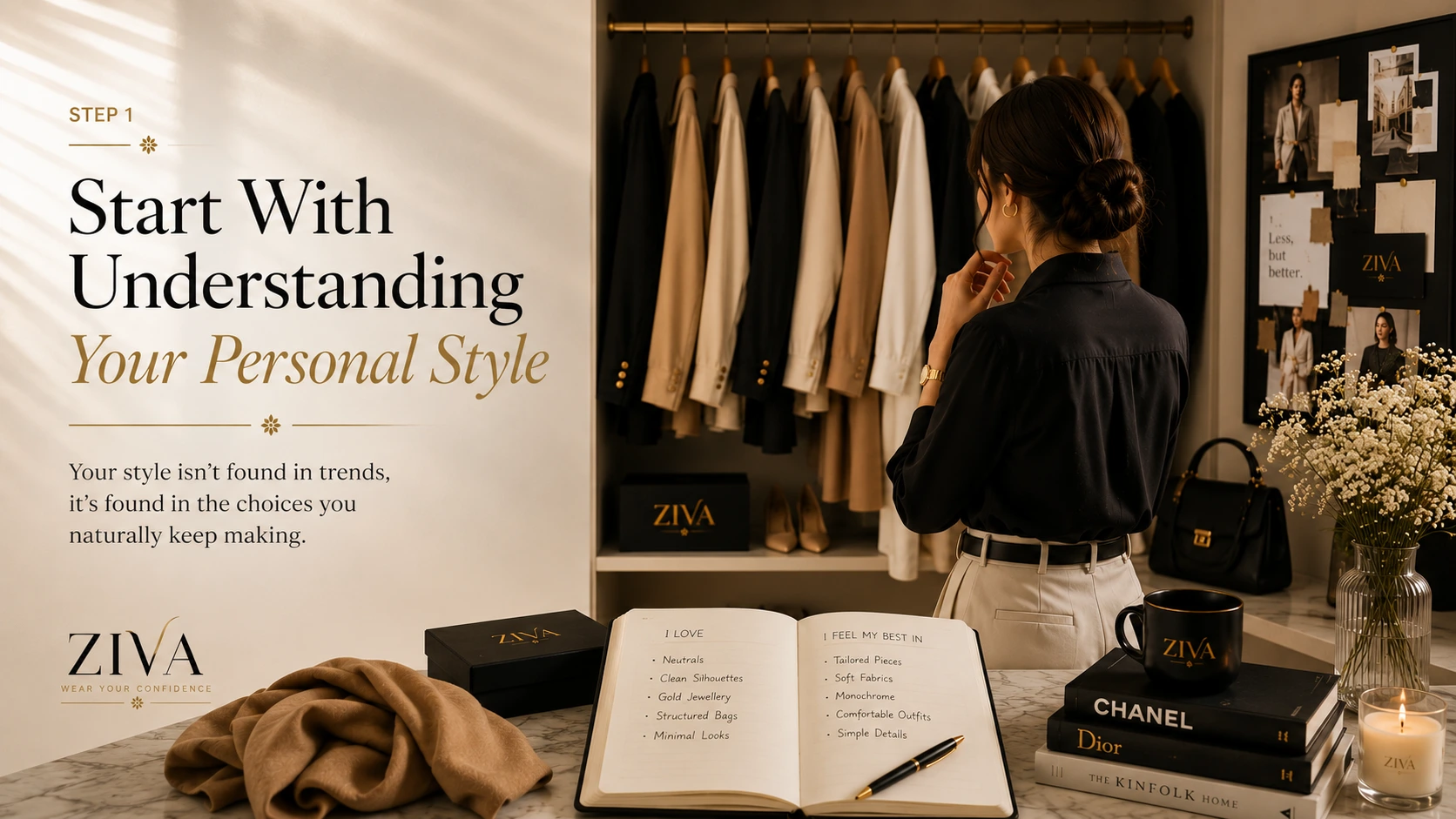
Personal style rarely announces itself. It shows up quietly, in patterns you've probably never stopped to name.
Open your closet — not to declutter, just to look — and pay attention to what keeps repeating. The color you own in four different versions without quite meaning to. The silhouette you reach for on days you actually want to feel good, not just presentable. The outfit that got you three compliments last year, the kind where you remember exactly what you were wearing when someone said it.
Now look at the other side. The dress you loved in the store and have worn once. The blazer that photographed beautifully and has sat untouched since. These aren't failures of taste. They're useful information — proof that admiring something and actually living in it are two different experiences.
Something can look beautiful without being right for you. That's a hard sentence to sit with, because it means the mirror isn't always the right test. The better test is closer to: does this still feel like me three hours into the day, after I've stopped thinking about how it looks and I'm just moving through my life in it?
A few honest questions help here:
What have I worn recently that made me forget I was wearing it — in a good way?
Which pieces do I keep even though I barely wear them, just because I like the idea of them?
If I removed the label and the price, would I still choose this?
There's no clean answer to any of these. That's fine. The point isn't to arrive at a tidy definition of your style. It's to start noticing.
Dress for the Life You Actually Live
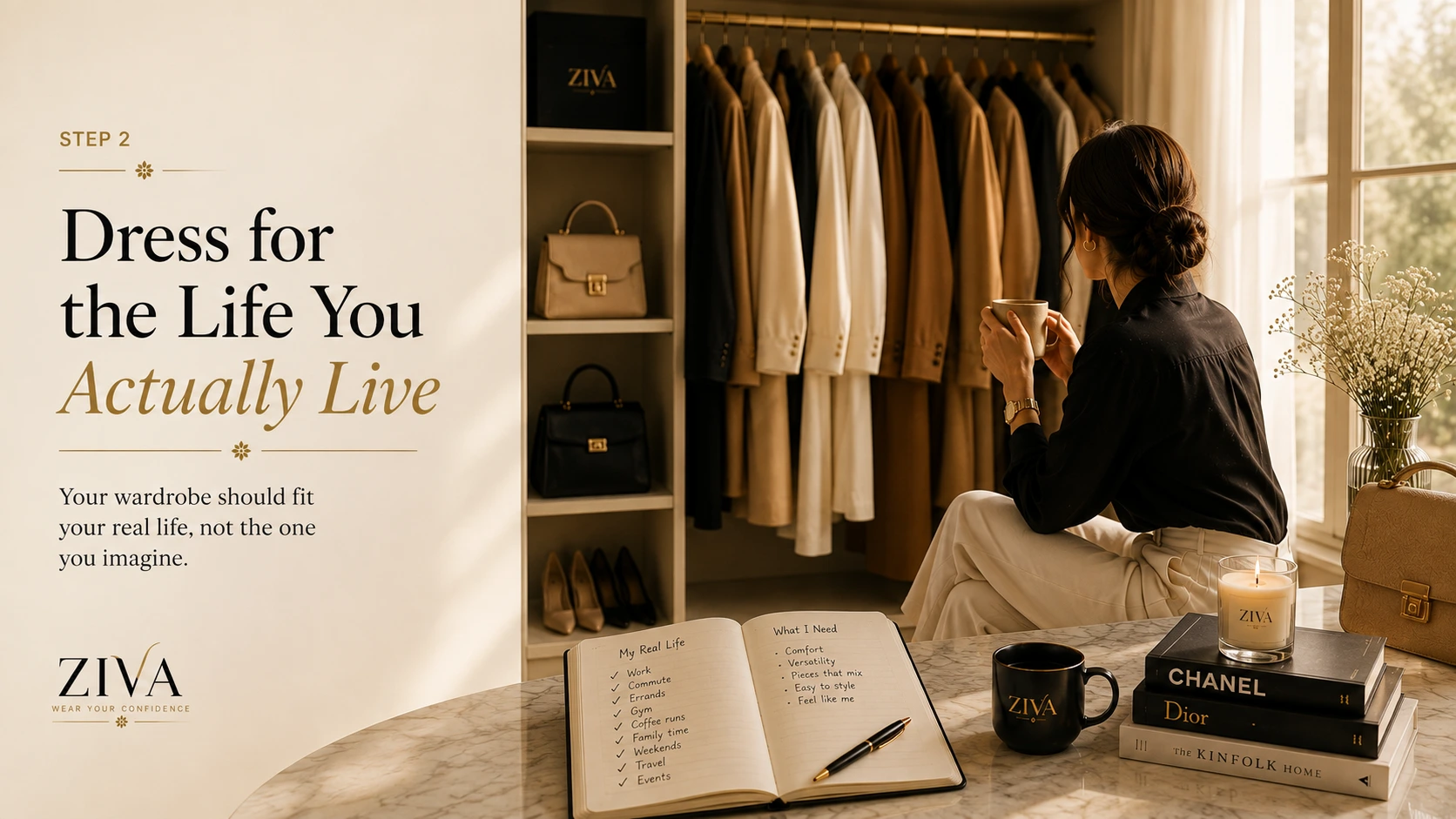
There's a version of a wardrobe most of us secretly build for — the one that matches the life we imagine having, rather than the one we're actually living.
It shows up as the occasion dress bought for a wedding season that turned out lighter than expected. The heels that look wonderful and get worn twice a year. None of this is wrong, exactly. But when a wardrobe leans too heavily toward the imagined life and not the lived one, getting dressed on an ordinary Tuesday becomes strangely difficult.
If most of your week moves between work, errands, and whatever's left of your evening, a closet full of occasion wear will look impressive and still fail you daily. The opposite is also true — someone whose life is genuinely full of events and travel will feel constrained by a wardrobe built entirely around quiet basics.
Neither is a better way to dress. They're just different lives, and the wardrobe should follow the life, not the other way round.
This doesn't mean giving up on aspiration completely. It means being honest about the ratio. If four out of five days are ordinary, the wardrobe should mostly reflect that — with enough room left for the fifth day to feel special when it actually arrives.
Build Around Pieces That Work Hard
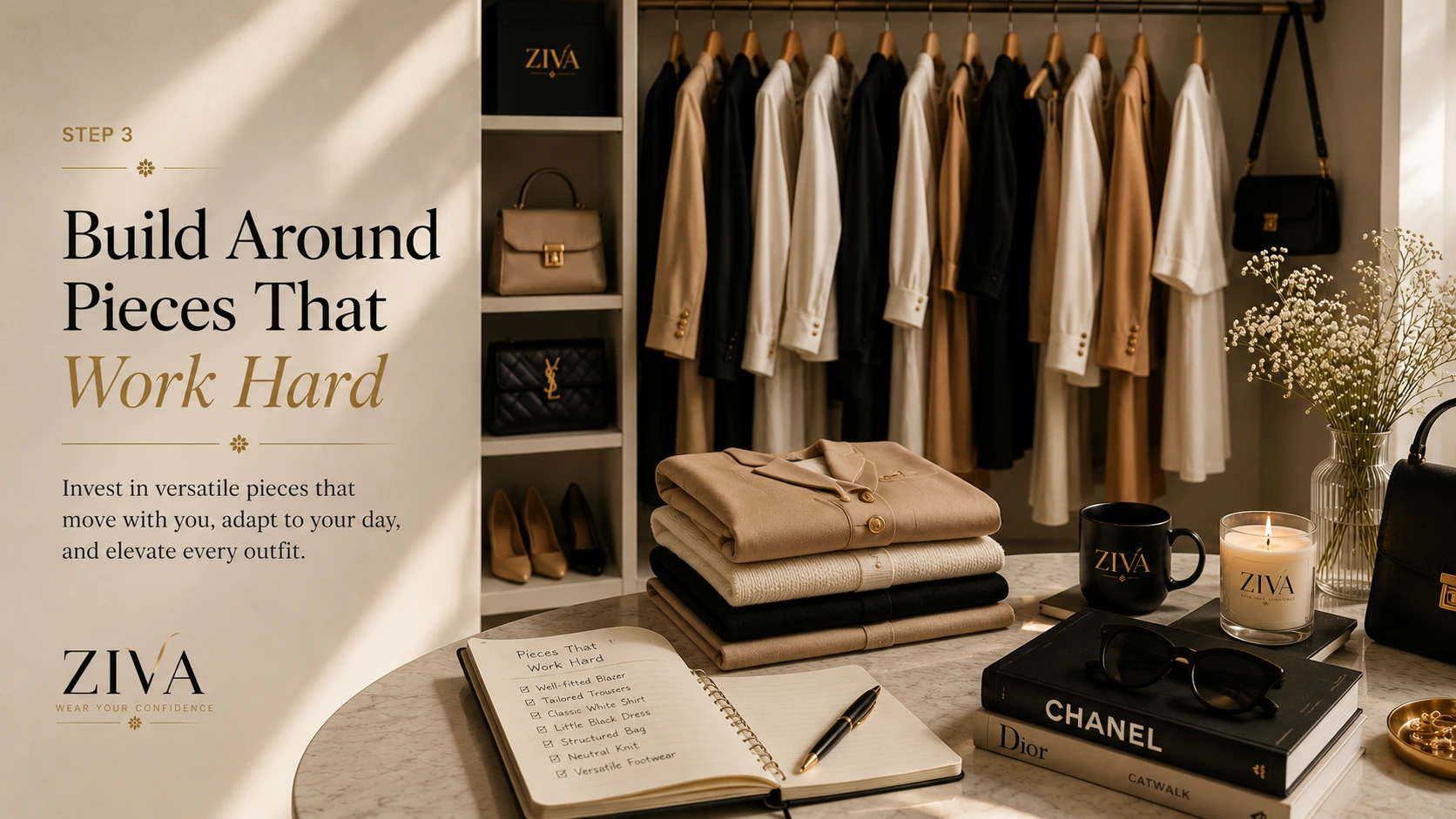
Somewhere underneath the fun, expressive pieces, most well-functioning wardrobes have a quieter layer doing most of the actual work.
This usually looks like a dress that moves easily from a work lunch to something slightly dressier in the evening. A pair of trousers cut well enough that you reach for them without thinking. A blazer that can sharpen a casual outfit or soften a formal one, depending on what's underneath it. A bag you didn't plan to wear with everything but somehow do, because it just works.
These pieces don't get much credit, mostly because they're not exciting to talk about. But their real value is range — how many different situations one piece can carry you through, rather than how much attention it draws when you first put it on.
None of this means "basic" has to mean forgettable. A well-fitted blazer with a slightly unusual shoulder line or a dress with a color you actually love can do this same quiet, hardworking job while still looking like it belongs to you specifically, not to a generic list of wardrobe staples.
Let Your Personality Show Through Statement Pieces
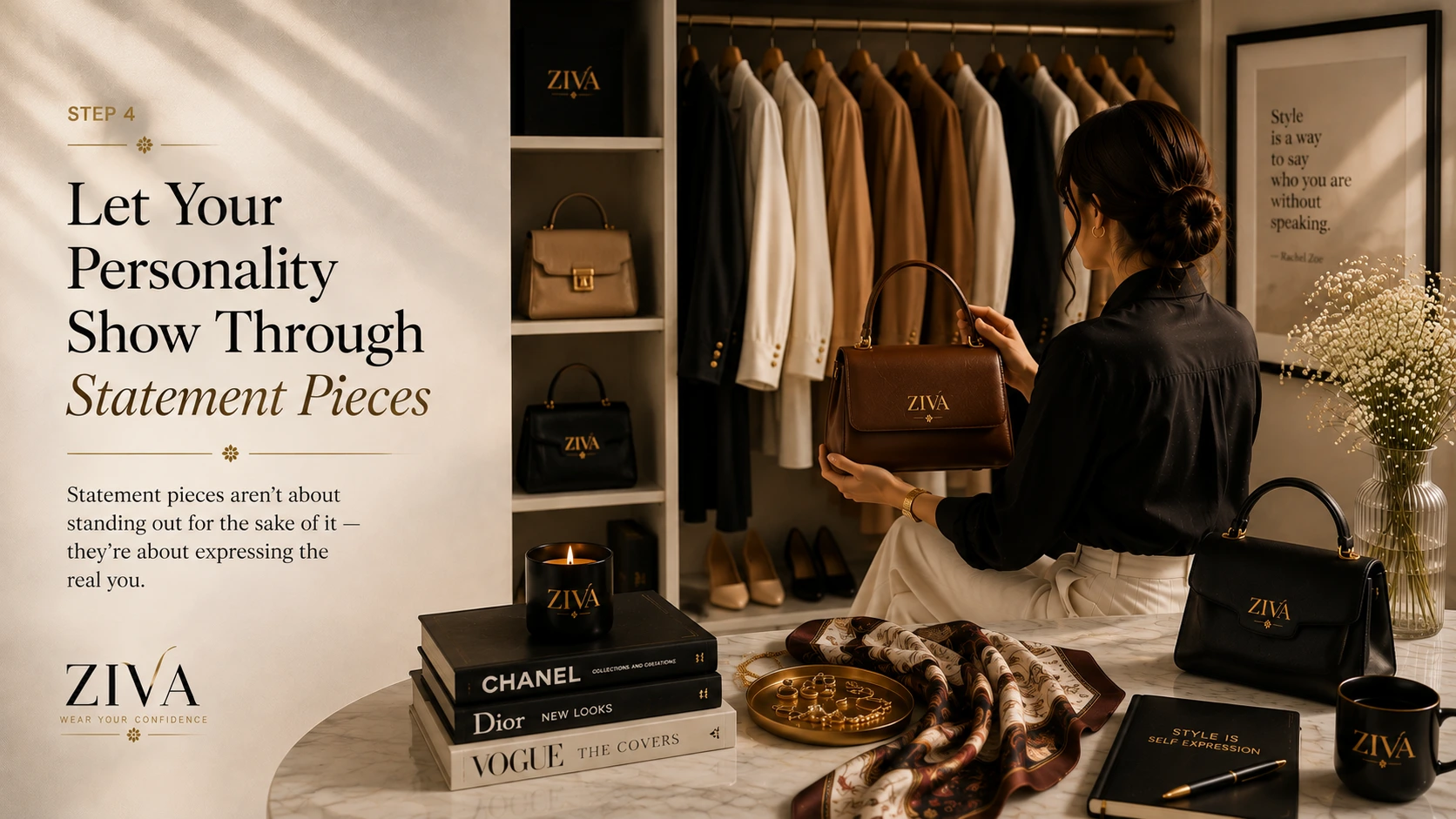
A wardrobe built entirely around practicality tends to start feeling a little flat, even when everything in it technically "works."
This is where personality earns its place — not necessarily through anything loud, but through the details that are recognisably yours. A color you always come back to, even when it's not particularly on trend. A bag with a shape everyone associates with you specifically. A print you'd never have picked for someone else but that somehow feels exactly right on you.
A statement piece doesn't have to be dramatic to do its job. Sometimes it's simply the one thing in an otherwise quiet outfit that makes it unmistakably yours — an unusual texture, a slightly unexpected pairing, an accessory you reach for without really thinking about why.
You're allowed to have taste that doesn't need justifying. Not every piece in your closet has to earn its place through usefulness. Some pieces are there because they're simply, distinctly you.
Choose Quality Over Quantity
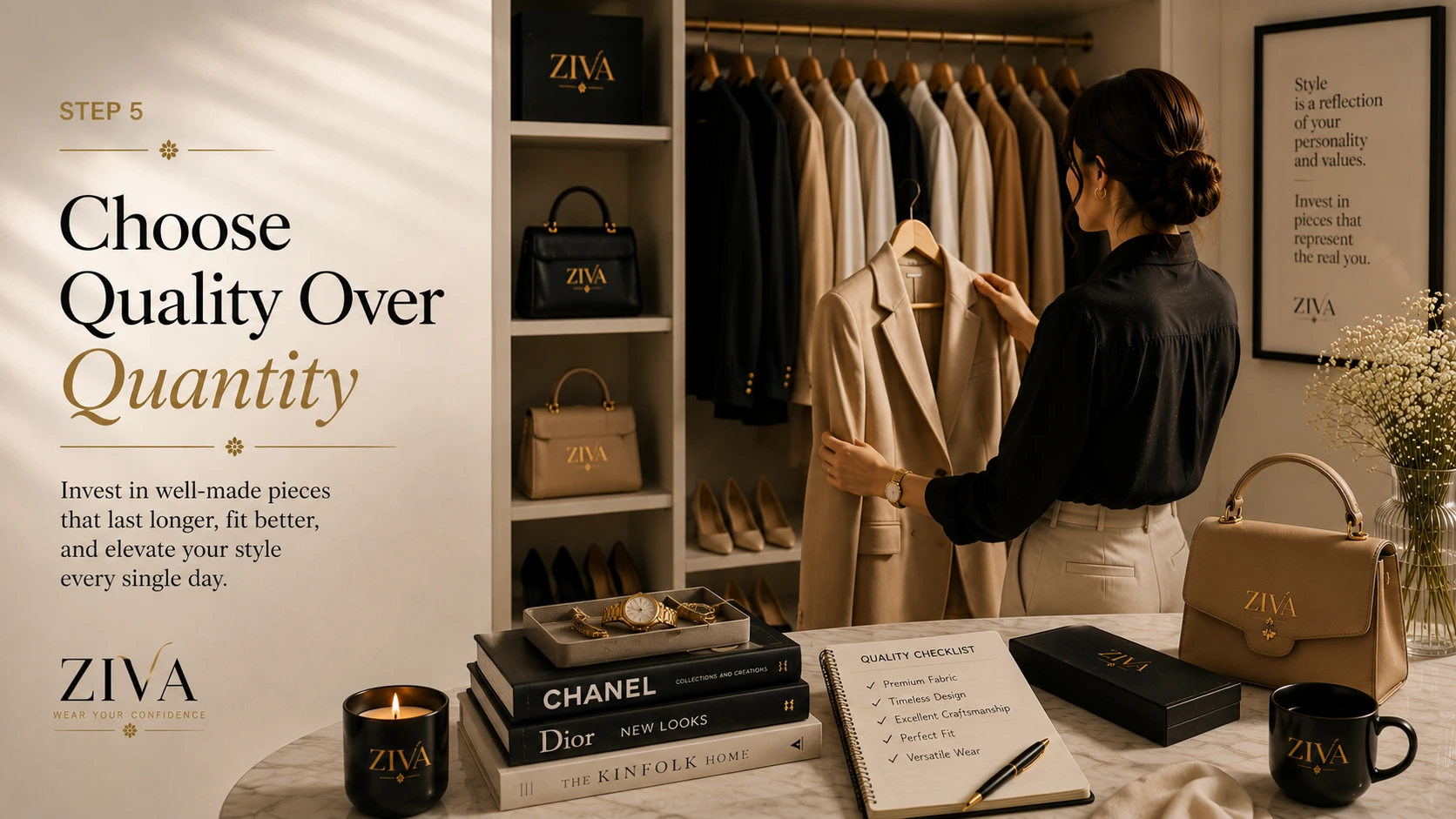
There's a familiar cycle worth naming honestly: buying often, buying cheaply, and ending up with a closet that's full but strangely short on actual outfits.
This has very little to do with how much money is involved. A well-made piece that gets worn constantly is worth more, in every practical sense, than an expensive one that sits in the closet looking impressive and doing nothing. A ₹500 top worn every other week earns its place far more than a ₹5,000 piece that's been worn once, for a photo.
Before adding something new, it's worth pausing on a few things. Does it actually fit — not "fits if I lose a bit of weight" but fits now? Is the fabric something you'll want against your skin on a regular Tuesday, not just under nice lighting? Can you picture at least a few real situations where you'd reach for it? Or is it more that it seemed like a good idea in the moment, in the store, under the store lighting, with the mirror angled just right?
None of this is about shaming a certain price point or assuming expensive automatically means better. It's simply about paying attention to what earns repeat wear and what doesn't — because that pattern tells you far more than the price tag does.
Learn the Difference Between Trend and Personal Style
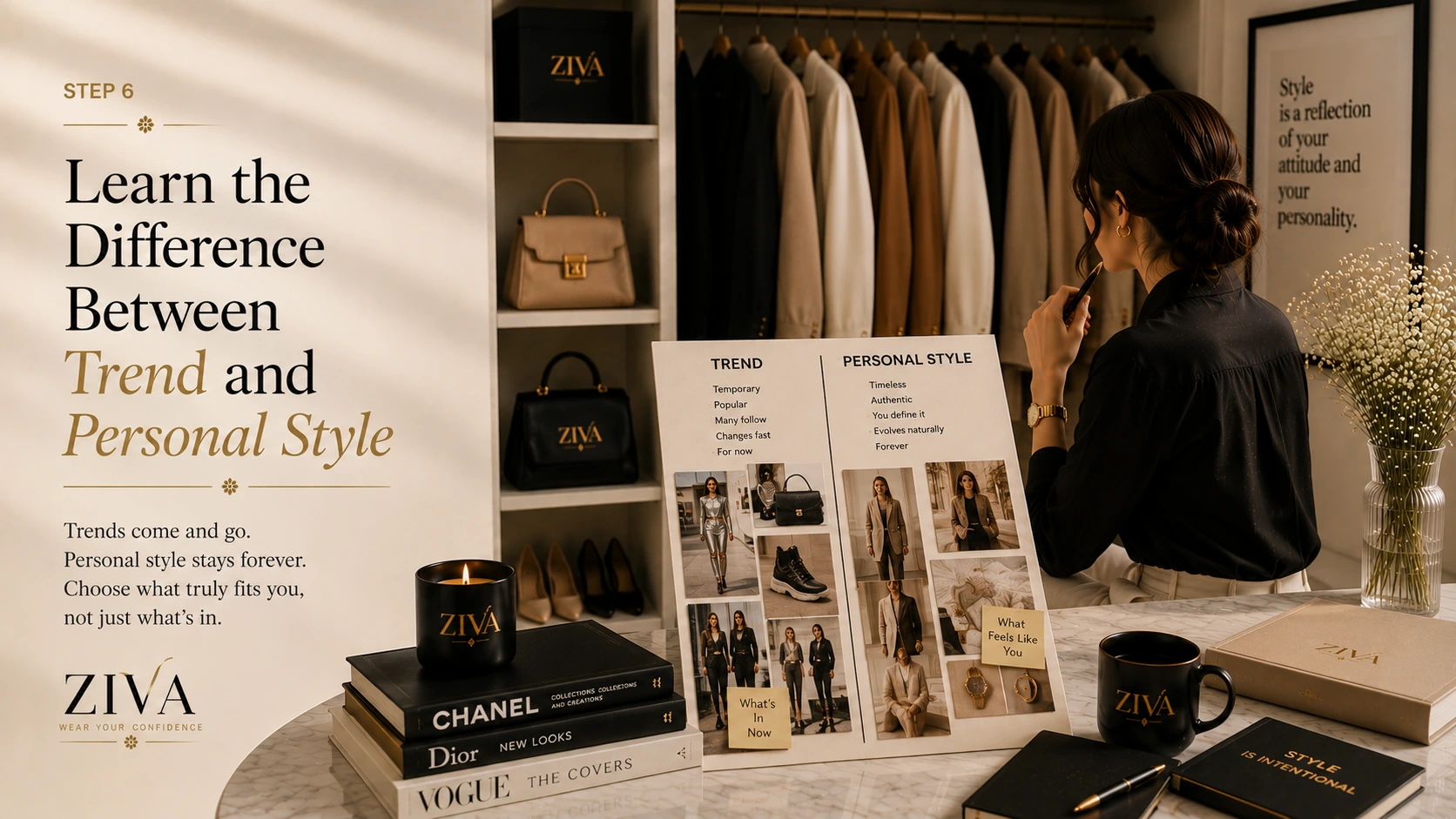
This is probably the most useful distinction in the entire conversation, and it's often the most confused one.
Trends aren't the enemy. They can genuinely be useful — a new color palette, a cut you hadn't considered, a way of styling something you already own. The problem isn't trends themselves. It's the pressure to treat every trend as a requirement, as though skipping one means falling behind.
A more useful filter is simply asking: does this actually work with the woman I already am? Not "is this popular right now," but "does this genuinely add something to how I already dress." Sometimes the answer is yes, and a trend becomes a small, considered addition. Sometimes it's no, and that's a perfectly reasonable place to land.
Trends can inspire you. They don't have to define you. Personal style gives direction — it's the throughline that stays recognisable even as small things shift around it. Trends, at their best, are simply suggestions passing through that throughline, not replacements for it.
Dress for Confidence, Not Approval
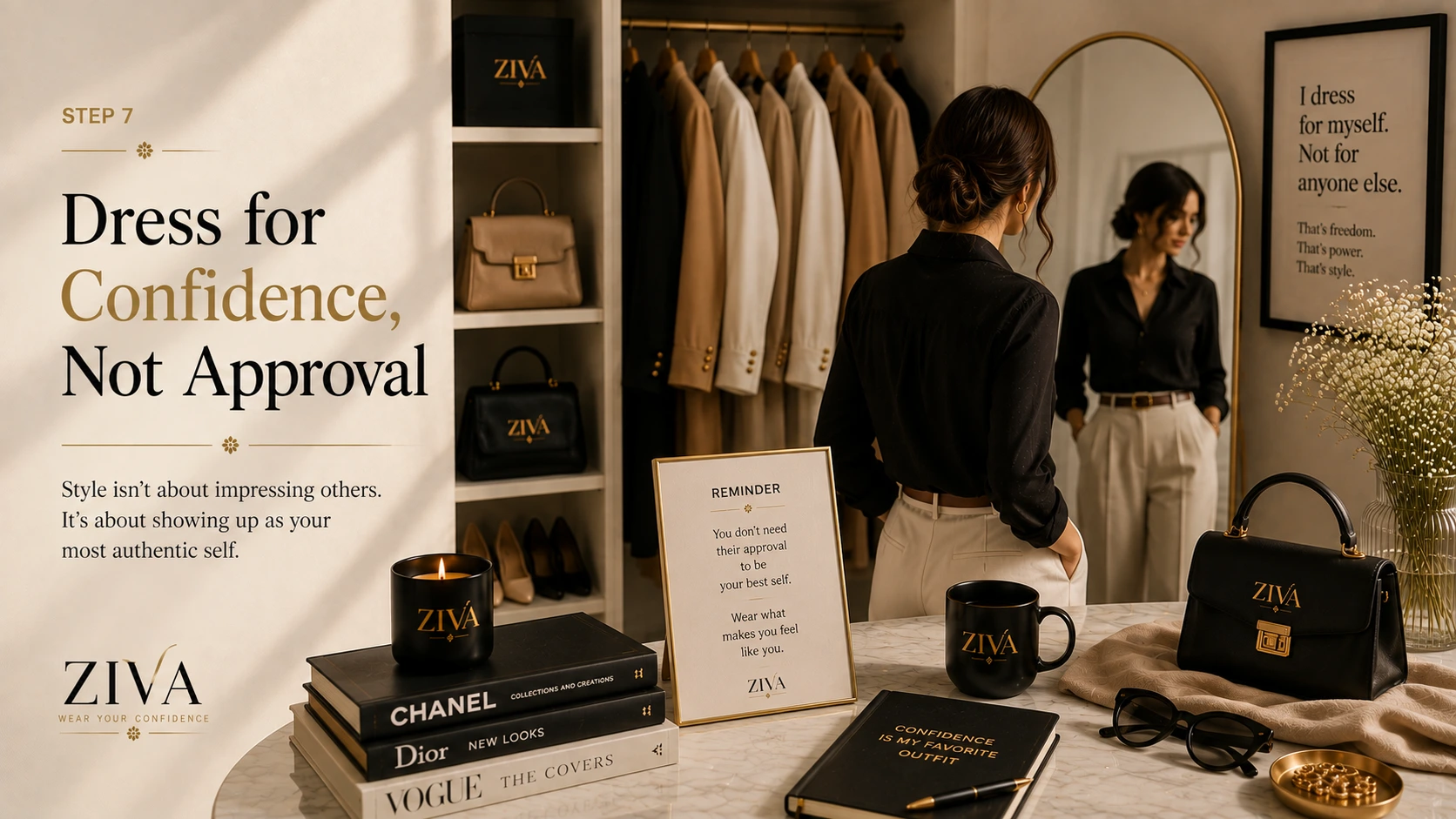
Clothes don't manufacture confidence out of nothing. Anyone who's worn an expensive outfit and still felt uneasy in a room already knows this.
What clothing can genuinely do is smaller, and more useful: the right outfit can help you feel aligned with how you actually want to show up that day. Posture straightens slightly. You stop adjusting things every few minutes. You're a little less aware of yourself, which, oddly, is often what makes you seem more confident to everyone else.
There's a real difference between asking "do I like this" and asking "will people like me in this." The second question has no stable answer — it depends entirely on who's looking, and it changes constantly. The first question is the only one that actually belongs to you.
This isn't a call to stop caring how you look. It's simply a suggestion to notice which question you're actually answering when you get dressed each morning.
Where ZIVA Fits In
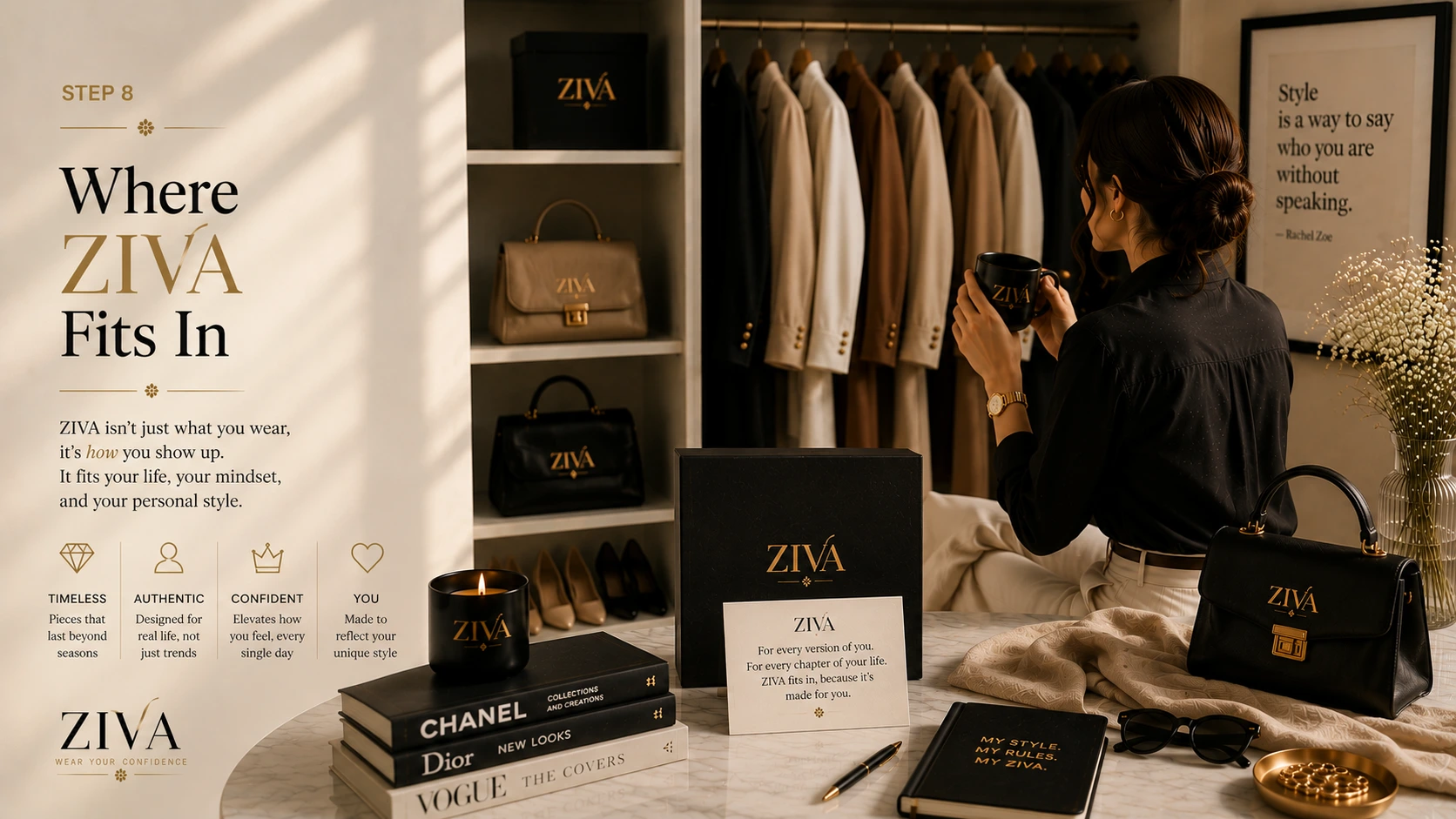
ZIVA started from a fairly simple observation: most women don't need more clothes. They need clothes that feel more like them.
That's the thinking behind "Wear Your Confidence" — not the idea that a garment can manufacture confidence from nothing, but that the right piece, well made and genuinely considered, can help a woman feel closer to how she already wants to show up. ZIVA isn't trying to get every woman dressing the same way. The intention is simpler than that: to make pieces considered enough — in fit, in fabric, in the small details — that they can actually earn a place in a wardrobe that's personal to whoever's wearing them.
Conclusion
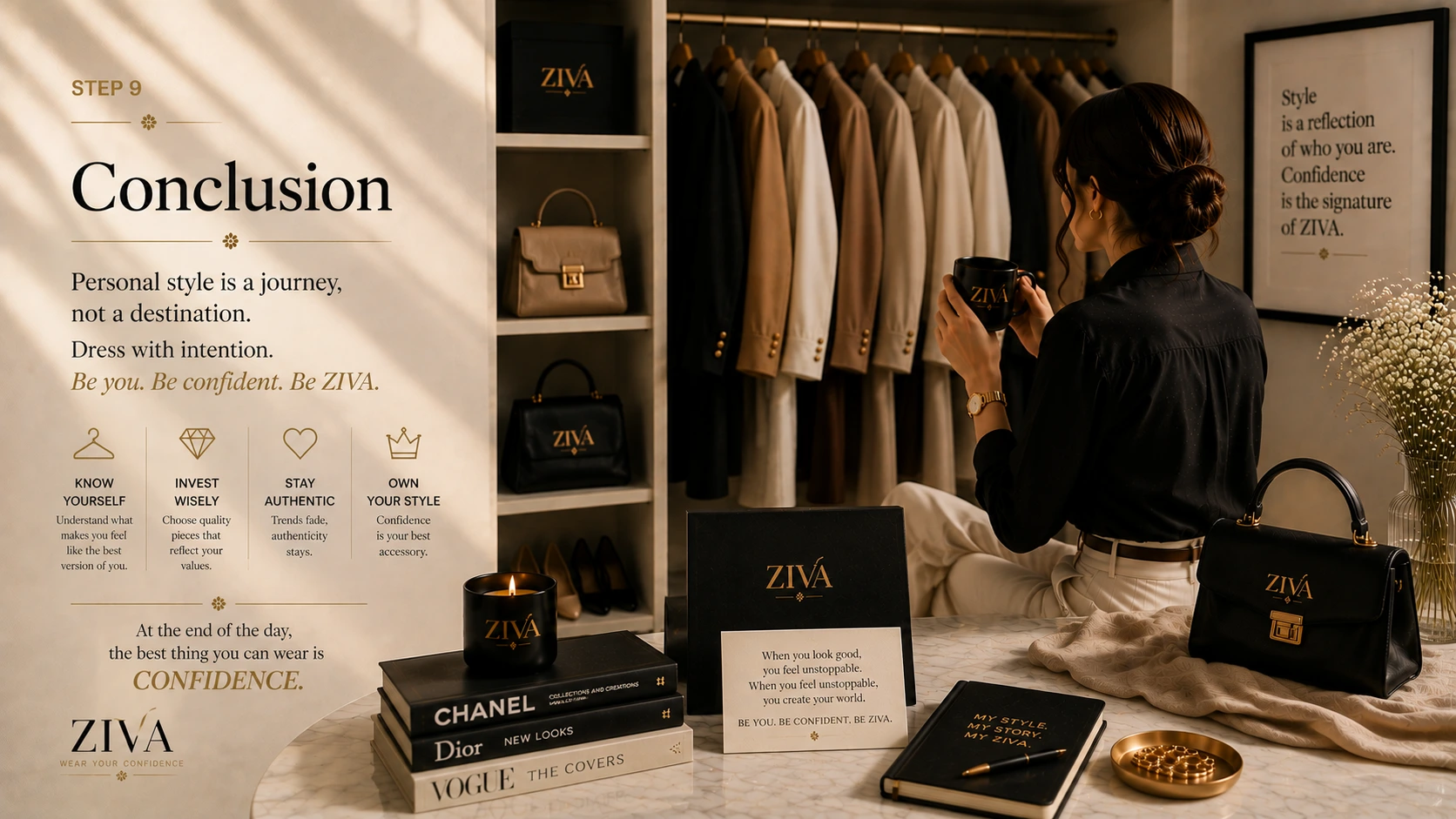
A wardrobe was never really meant to impress a room full of strangers. It was meant to feel right on the person standing in it.
That's a small shift in thinking, but it changes quite a lot — what you buy, what you keep, what finally gets passed along to someone else. It turns getting dressed from a small daily performance into something closer to a habit of self-recognition. Less about acquiring more. More about noticing what you already reach for, being honest about the life you're actually dressing for, and being a little more selective about what earns a place in your closet going forward.
None of this happens in one weekend or one big shopping trip. It happens slowly, one considered piece at a time, usually with a few mistakes along the way.
Explore ZIVA and discover pieces that feel like you.